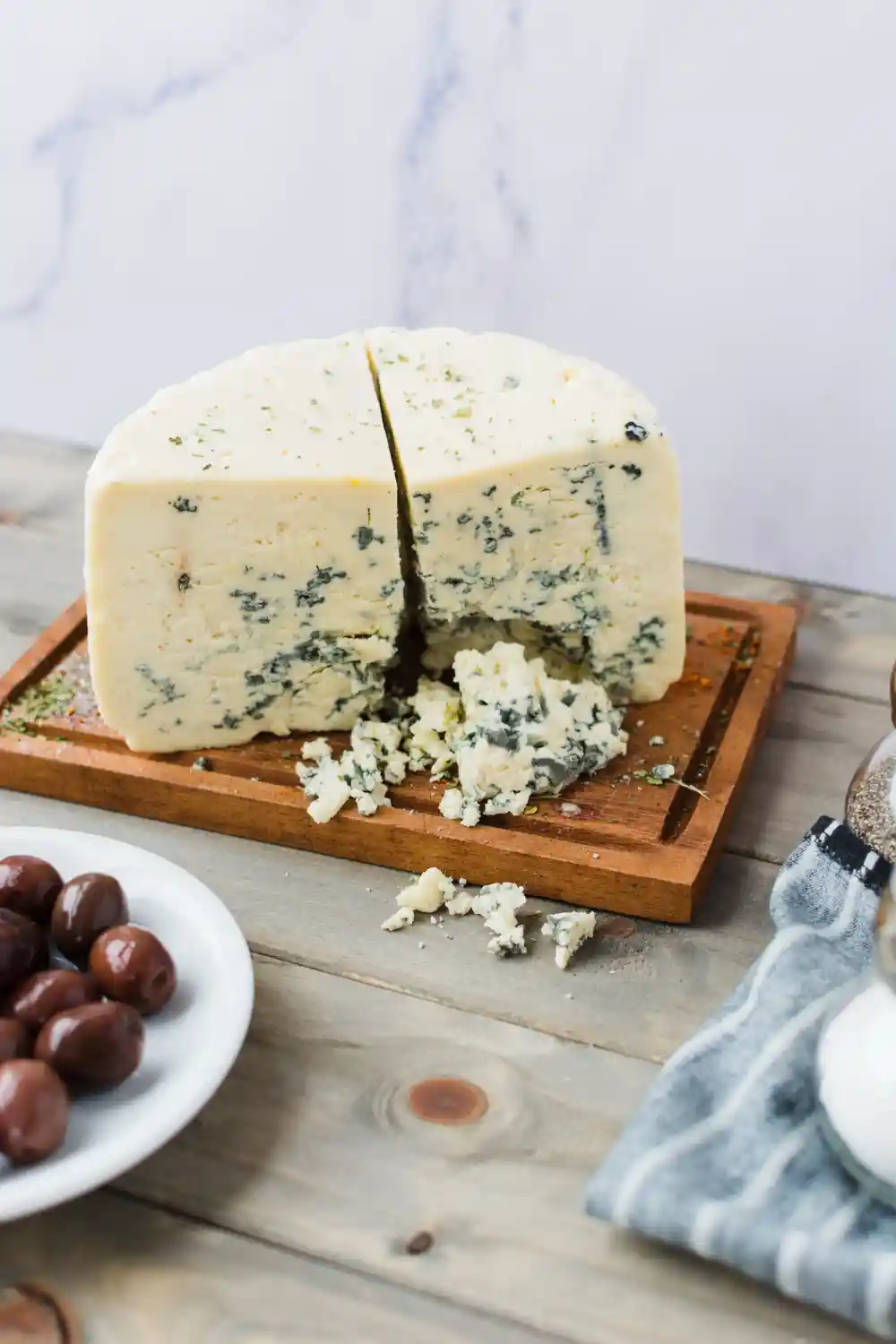
Blue cheese is a general term used for cheese made from pasteurized cow, sheep, or goat milk and aged with Penicillium mold. Blue cheese typically has a salty, sharp flavor and a strong aroma. It is often relatively low in fat but high in sodium. Blue cheese is a good source of protein, calcium, and phosphorus.
What is Blue Cheese?

Елена Талин
4 min
What is blue cheese?
Blue cheese is believed to have been discovered accidentally when cheese was stored in temperature and humidity-controlled caves during the Middle Ages. It is thought that once in Roquefort, France, a cheesemaker left bread with cheese in a cave, and when he returned, he found that the mold covering the bread had transformed the cheese into blue cheese.
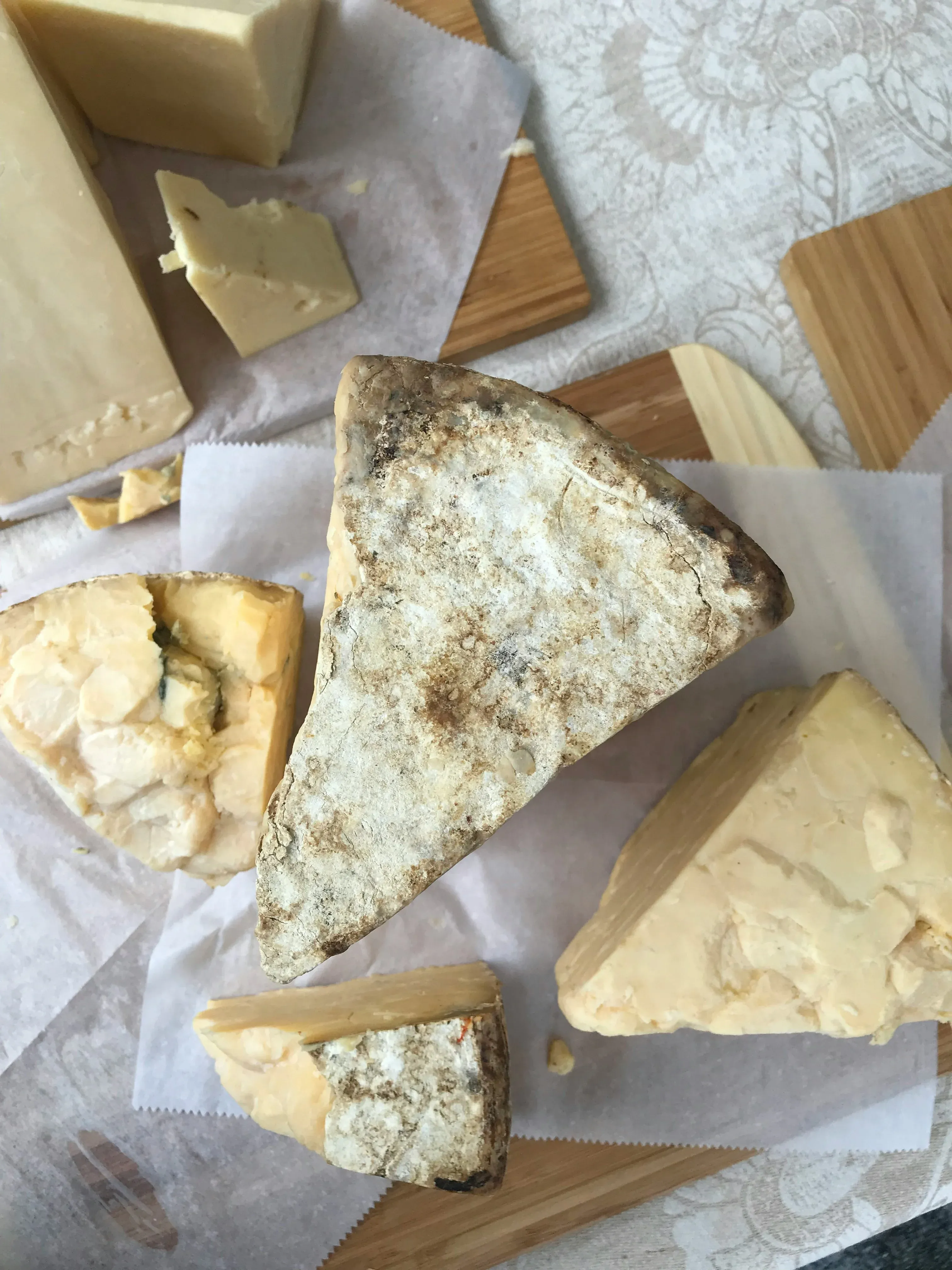
There are many varieties of blue cheese. The earliest versions were produced in France and Italy, and later throughout Europe and North America. Depending on the type of blue cheese, the flavors range from crumbly, tangy, salty, and sharp to softer, creamier, and slightly earthy. Some versions are enriched with cream and have a soft texture and a coating of white mold. Regardless of the version and flavor profile, blue cheese is characterized by green, blue, gray, or black veins or spots of mold. Many types are available in supermarkets and specialty stores and range from inexpensive to expensive, depending on the source.
How is blue cheese made?
Blue cheese is made from cow's, sheep's, or goat's milk, with special types of molds from the Penicillium family added. The milk is heated and a starter culture is added to curdle it. The cheese is then left to age, during which the molds develop and give it its characteristic blue-green color and tangy flavor. Often, the cheese is pierced with needles to allow air to circulate and help the molds develop within it.
Types of blue cheese
-
Roquefort: Considered one of the oldest blue cheeses and also a delicacy. Made from sheep's milk and aged in the limestone caves of southern France, Roquefort is recognized for its blue veins that run through its moist and crumbly structure. It is beautifully nuanced, both creamy and aromatic, complex and intense, with sharp and sweet flavor notes.
-
Gorgonzola: An Italian cheese made from milk of cows grazing in the pastures of Lombardy and Piedmont. Young Gorgonzola is soft, buttery, and creamy with slight hints of sharp blue flavor. Aged versions are earthier, with a stronger taste and a more pungent bite.
-
Blue Stilton: A cow's milk cheese produced in the English Midlands. It is a robust cylindrical cheese, beautifully marbled with blue veins. It has a slightly moist and crumbly texture with a rich, creamy, nutty, and salty flavor.
-
Danablu: A Danish blue cheese made from cow's milk, produced on the island of Funen. It has a creamy and smooth texture and a slightly sharp and salty flavor, similar to Roquefort but milder.
Storage
Store opened blue cheese wrapped in foil or parchment or wax paper in the refrigerator for up to three weeks. Blue cheese can also be wrapped and frozen in an airtight container or zip-top bag for up to three months and thawed in the refrigerator. The texture of frozen blue cheese will become more crumbly, and the flavor will slightly diminish, so it is best to use thawed blue cheese in cooked dishes.
Blue Cheese in the Kitchen
Blue cheese is widely used in the kitchen for its strong and distinctive flavor. It can be added to salads, combined with nuts and fruits, or melted over meats and vegetables. Blue cheese is ideal for making sauces that complement pasta, steaks, or burgers. It is often used on cheese platters or as an accompaniment to wines and aperitifs. Its rich flavor pairs well with foods that have more neutral or sweet notes, such as honey or pears.
This content was translated with the help of AI and may contain inaccuracies.
Similar recipes