Why is my bread not rising?

We've all been there. The bread you've kneaded for hours comes out of the oven and... let's just say, it's not what you expected. Instead of rising into a tall, airy loaf, it just sits there. What went wrong?

In fact, there are many things that can go wrong. Let's look at some of the most common reasons why your bread isn't rising.

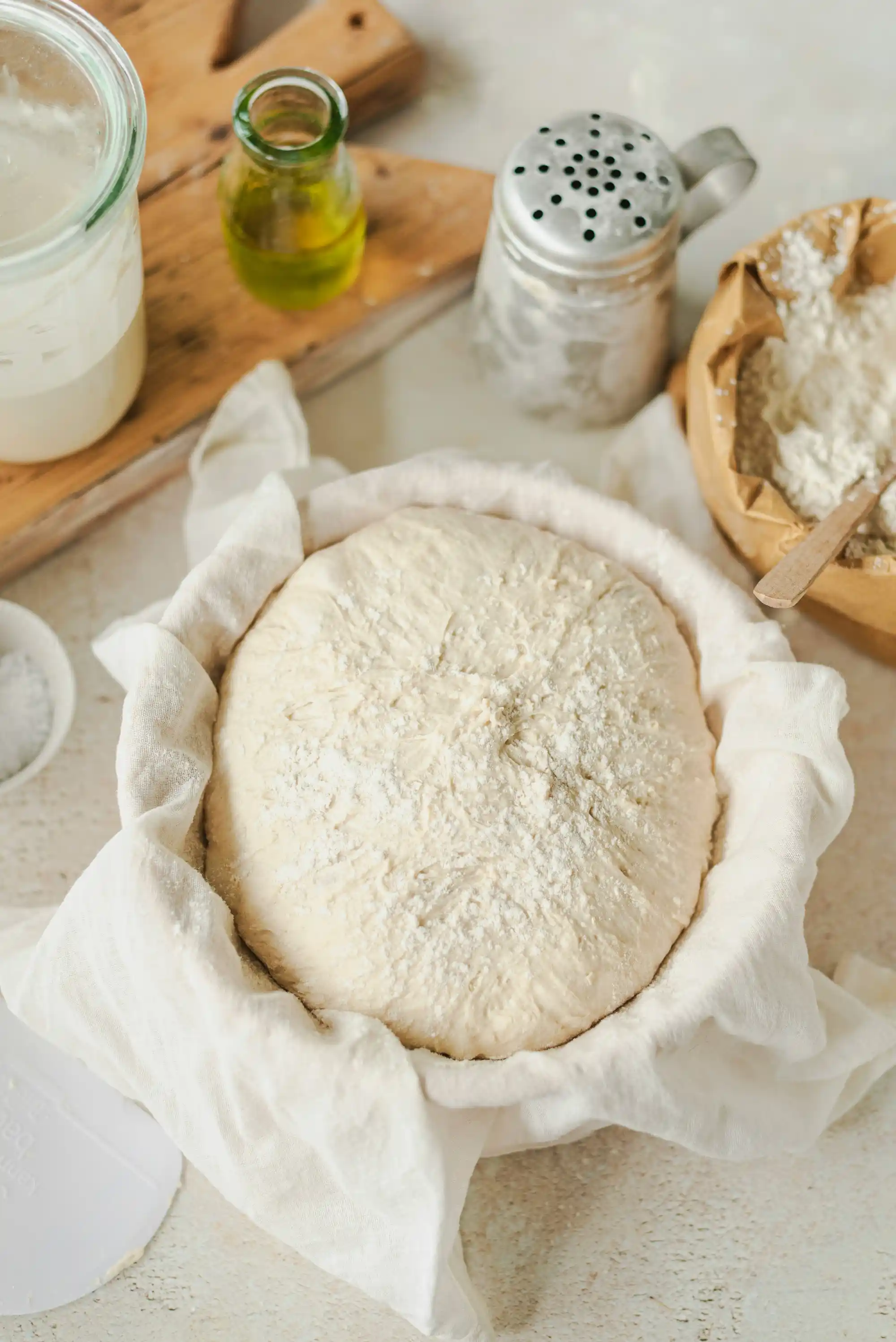
Пресен хлябов тесто, покрито с брашно, поставено в платнена кърпа върху дървена дъска. В близост има буркани с кисело мляко и масло, както и дървена купа, пълна с брашно, и метален сито за брашно. На заден план се вижда светло дървен плот.
Follow the recipe

The most common problem is not following the recipe. This may seem obvious, but it's worth repeating. Once your bread is consistently rising and turning out well, you can start experimenting. But until then, your plan should be to choose the right recipe and follow it exactly.<br><br>The right recipe should list ingredients by weight, not by volume. Measuring flour in cups and ounces is extremely inaccurate and can lead to all sorts of problems with fermentation and dough rising.<br><br>Use recipes that list quantities in grams. This means you'll need a digital kitchen scale. They are inexpensive and absolutely necessary.<br><br>Even with a good recipe, your bread may not rise. But if you know you've followed it exactly, it's easier to determine what the problem is.

Yeast issues

Yeast is what gives bread its rise. If your bread isn't rising, make sure your yeast hasn't expired. Yeast is a living organism, so if you've kept it in the fridge too long, some of it may have died and won't produce enough rise. Check the expiration date and store it in the fridge or freezer.<br><br>Use the type of yeast that your recipe recommends (dry or instant is best). Dry yeast should be dissolved in warm water before adding it to the other ingredients. But if the water is too hot, it can kill the yeast. If it's too cold, the yeast won't activate. Use a thermometer to ensure the water is around 40 °C.<br><br>Too much salt or sugar can also kill your yeast. Salt should be no more than 2 percent of the weight of the flour, and sugar no more than 10 percent.

Use your eyes, not the clock

If your bread hasn't risen, you may simply not have given it enough time. Some recipes offer vague instructions like "let the dough rise until it doubles in size," followed by some arbitrary time unit like "about an hour." But factors like temperature and humidity in your kitchen will affect how quickly your dough rises. Instead, focus on the dough and use time units as approximate guidelines.<br><br>If you're baking in a loaf pan, a helpful guideline is that the dough's peak (in the center of the bread, not at the edge) should rise one inch above the rim of the pan. (This assumes you're using the right loaf pan, which we'll discuss shortly.) Letting the dough rise beyond this can weaken the gluten structure and cause the bread to collapse in the oven.

Use the right loaf pan

Speaking of loaf pans, you may be surprised to learn that there is a significant difference between a 20 x 10 cm pan and a 22 x 12 cm one. This may not sound like much, but the latter is actually 30 percent larger than the former. This can affect the shape of your bread. With a 22 x 12 cm pan, your bread will have a flatter shape. So make sure you have a 20 x 10 cm pan and use it.

Other factors
  • Insufficient or excessive kneading of the dough: Insufficient kneading won't develop the gluten to the necessary elasticity to rise. Excessive kneading causes the gluten proteins to become tough, and the gases from the yeast won't have enough strength to lift them.<br><br>- Hard/soft water: Hard water can slow down the fermentation of the dough, while soft water can lead to slack dough. Use bottled water if your water is too hard or too soft.<br><br>- Chlorine in the water: Excess chlorine can kill your yeast. If your water smells of chlorine, let it sit overnight to allow the chlorine to evaporate.<br><br>- Whole grain flour: Whole grain flours like whole wheat or rye do not produce the same elastic gluten as all-purpose flour, which can lead to denser doughs that don't rise as well.<br><br>- Dry crust: If the surface of your dough dries out, it can hinder rising. Keep the dough covered while it proofs to prevent a crust from forming.